Emergency Dentist Plano, TX: Your Guide to After-Hours Dental Care
A dental emergency rarely arrives at a convenient hour. It shows up during dinner, after a soccer game, on a holiday weekend, or just as you are settling into bed. One minute you are fine, the next you are holding your jaw, rinsing blood from the sink, or trying to figure out whether a cracked tooth can wait until morning. If you Emergency dentist Plano, TX are searching for an emergency dentist Plano, TX, you probably do not need vague reassurance. You need clear judgment, fast next steps, and a realistic sense of what counts as urgent.
After-hours dental care sits in a gray area that catches many people off guard. Some problems are painful but not dangerous. Others look minor and can become much worse if you wait. The difference often comes down to timing, swelling, bleeding, the cause of the injury, and whether the tooth can still be saved.
Plano families deal with the same dental surprises seen anywhere else, but local routines shape the pattern. Weekend sports, school activities, late work schedules, and the simple sprawl of North Texas all matter. If a child gets hit in the mouth at a Saturday baseball game or an adult wakes with severe tooth pain after a Friday night meal, access and timing become part of the emergency itself.
What actually qualifies as a dental emergency
Not every tooth problem needs same-night care, but certain symptoms should move to the top of your list. Severe, persistent pain is one. Swelling is another, especially if it involves the face, gums, or jaw and seems to be spreading. Trauma matters too. A knocked-out tooth, a broken front tooth, or a tooth that suddenly becomes loose after an impact is time-sensitive.
Bleeding is where people often misjudge the situation. A little blood after biting your cheek or flossing too hard is not the same as bleeding that continues after pressure. Uncontrolled bleeding needs urgent attention. The same goes for signs of infection, such as pus, foul taste, swelling near a tooth, or fever with dental pain.
One practical way to think about it is this: if the problem threatens the tooth, affects your ability to breathe or swallow, or causes intense pain that over-the-counter medication does not touch, it deserves immediate evaluation. If the problem is annoying but stable, such as a lost filling with only mild sensitivity, you may be able to protect the area overnight and be seen the next business day.
The emergencies that should never wait
Some situations cross the line from urgent to potentially dangerous. These are not cases for watchful waiting or internet guesswork.
- Swelling that affects breathing, swallowing, or opens the mouth only with difficulty
- A knocked-out permanent tooth
- Bleeding that does not stop after firm pressure
- Facial trauma involving the teeth, jaw, or possible fracture
- Severe pain with fever, especially when swelling is present
If breathing is affected, or if there is major facial injury, the emergency room may be the right first stop. Dentists manage teeth, gums, and many oral infections, but airway concerns and suspected facial fractures often require hospital-based care. Good emergency dental offices will tell you that directly.
Why after-hours problems escalate so quickly
Teeth are not forgiving once the internal structures are involved. A small crack can become a deep fracture after a night of grinding. A cavity that has been grumbling for weeks can flare into severe pulp pain over a single evening. An untreated abscess can turn a localized infection into facial swelling much faster than many patients expect.
I have seen people wait because the pain briefly faded, only to return with a throbbing pulse at 2 a.m. That temporary lull can be misleading. Pressure changes inside the tooth or drainage from an infected area may reduce symptoms for a short period without solving the cause. When the pain returns, it is often worse.
Children add another layer. A child may look calm after a playground injury, then start crying an hour later when the adrenaline wears off. Parents also hesitate when baby teeth are involved, assuming less urgency because those teeth will eventually fall out. Sometimes that is true. Sometimes it is not. Trauma to a baby tooth can damage surrounding tissue, affect the adult tooth developing underneath, or create a painful infection. Judgment matters.
How to tell whether to call an emergency dentist or wait until morning
The best question is not “Can I survive the night?” but “What am I risking by waiting?” If the answer includes losing the tooth, spreading infection, uncontrolled bleeding, or uncontrolled pain, it is time to call.
A chipped tooth gives a good example of how context changes the answer. If the chip is tiny, there is no pain, and the edges are smooth, next-day care is usually fine. If a large piece breaks off, dentin is exposed, the tooth is sensitive to air, or the break changes your bite, you should be seen quickly. The same tooth, two very different levels of urgency.
A lost crown can often wait a little if the tooth underneath is not painful and can be protected. A knocked-out permanent tooth cannot. The first situation is inconvenient. The second is a race against the clock.
The same logic applies to pain. Mild cold sensitivity can usually wait. Sharp pain that wakes you from sleep, makes it hard to concentrate, or radiates into the ear and jaw usually cannot. Severe pain is your body’s way of announcing that this is no longer a small problem.
What to do before you get to the office
The window between the injury and the appointment matters. What you do at home or on the field can improve the odds of saving the tooth and reducing complications.
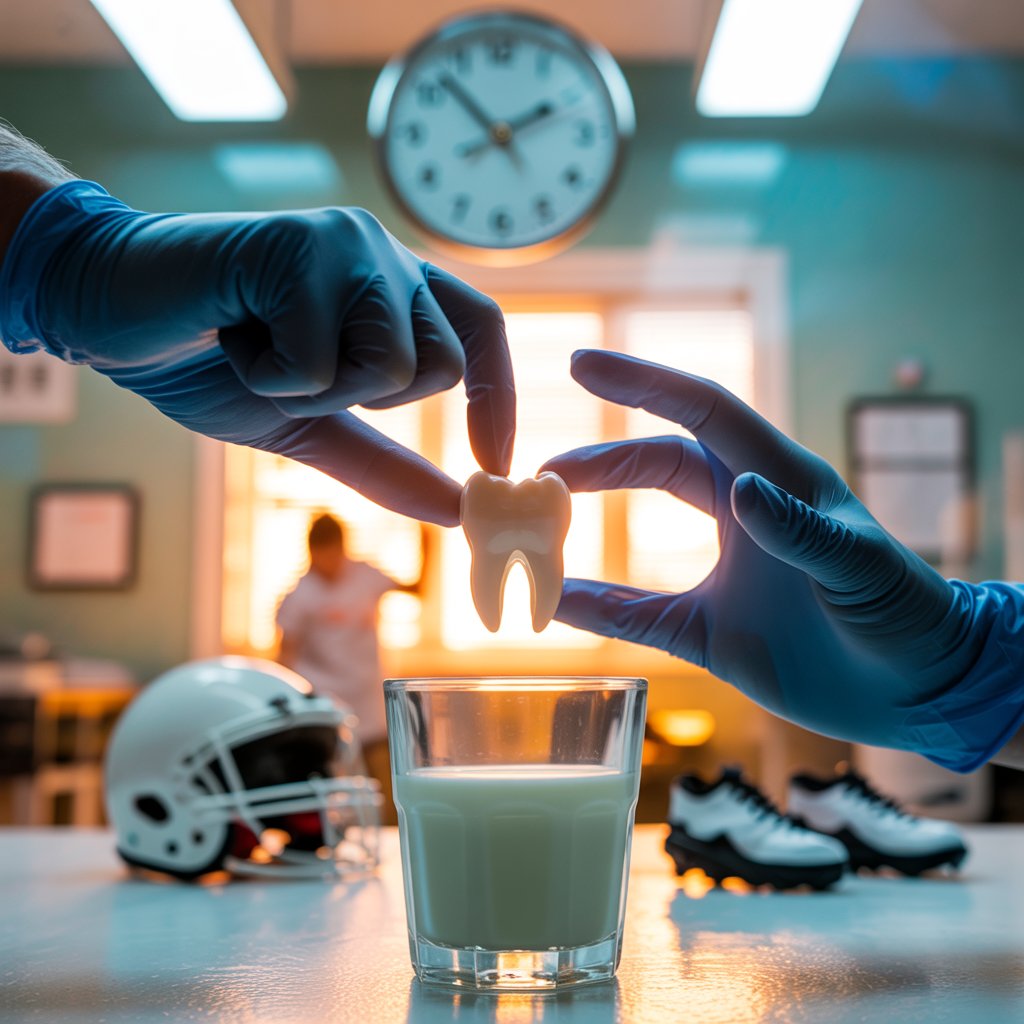
- For a knocked-out permanent tooth, hold it by the crown, not the root, and place it in milk or a tooth-preservation solution if available
- For swelling, use a cold compress on the outside of the face in short intervals
- For bleeding, apply firm pressure with clean gauze or cloth
- For a broken tooth, save the pieces if you can and rinse gently with water
- For pain, take over-the-counter medication as directed unless a medical condition prevents it
A few cautions make a real difference. Do not place aspirin directly on the gums. It does not help the tooth and can irritate the tissue. Do not scrub a knocked-out tooth or wrap it in a dry paper towel. And do not ignore a bad taste in the mouth if it comes with swelling or throbbing pain. That combination often points to drainage from an infection.
If a child knocks out a tooth, first figure out whether it is a baby tooth or a permanent tooth. Reimplanting a baby tooth is generally not advised because it can harm the adult tooth beneath it. A permanent tooth, especially in an older child or teenager, is different and needs urgent guidance.
What happens during an after-hours dental visit
People often expect a full, definitive fix at midnight. Sometimes that happens. Often the immediate goal is more focused: stop pain, control infection, stabilize damage, and protect the tooth until complete treatment can be finished under normal conditions.
An emergency visit typically starts with a quick but targeted exam. The dentist wants to know when the problem started, whether there was trauma, what makes the pain worse, whether there is swelling, and what medical issues may affect treatment. X-rays are common because many urgent problems, such as root infection, fracture pattern, or the position of a displaced tooth, cannot be judged accurately by sight alone.
From there, treatment depends on the cause. A severe toothache from inflamed pulp may need access to relieve pressure, temporary medication inside the tooth, or a referral for root canal treatment. A fractured tooth may need smoothing, bonding, a temporary build-up, or extraction if the break is not repairable. An abscess may require drainage, antibiotics in selected cases, and close follow-up. Trauma cases often need splinting, repositioning, or temporary stabilization.
Not every emergency ends with antibiotics, and not every painful tooth needs extraction. One of the most common misconceptions in urgent dental care is that antibiotics are a substitute for treatment. They are not. If the source of the problem remains, the pain often returns as soon as the medication stops.
The most common after-hours dental problems in Plano
The usual suspects are severe toothaches, broken teeth, lost crowns, abscesses, sports injuries, and wisdom tooth flare-ups. Plano’s active youth sports culture makes trauma especially common. A ball to the mouth, an elbow during basketball, a fall from a bike, or even a poolside slip can turn into an after-hours call.
Adults tend to show up with a different pattern. Cracked molars are common in patients who grind their teeth, chew ice, or bite unexpectedly on something hard like an olive pit or popcorn kernel. Existing dental work can also fail at awkward times. A crown that has been loose for weeks often decides to come off during dinner, not at 10 a.m. On a Tuesday.
Another repeat scenario is the “Friday abscess.” A patient has had on-and-off pain for a month, gets through the workweek, then wakes with swelling heading into the weekend. By that point, the issue is rarely minor. The body has been warning them for a while.
Cost, insurance, and the reality of urgent dental care
People hesitate to call because they worry about cost. That concern is understandable, especially after normal business hours. Emergency dental fees vary depending on the office, the time of day, whether imaging is required, and what treatment is done that night. There is no honest one-size-fits-all estimate.
What helps is to ask direct questions when you call. Ask whether there is an emergency exam fee, whether x-rays are separate, what forms of payment are accepted, and whether the office can give a range for common procedures. A straightforward front desk or on-call team should be able to explain the basics without overpromising.
Insurance coverage can also be uneven. Some plans help with urgent evaluations and imaging but cover only part of the treatment. Others separate medical and dental trauma in ways that confuse patients, especially after an accident. If a facial injury happened during sports, at work, or in a car accident, both your dentist and your insurer may need details about how the injury occurred.
Cost matters, but delay has a cost too. A small crack that could have been bonded may become a root canal and crown. An infection that could have been drained locally may end up requiring more extensive treatment. Waiting is not always the cheaper choice.
How to choose an emergency dentist when you are already under stress
When pain is intense, people often click the first listing they see. That is understandable, but a few markers can help you make a better choice quickly. Look for clear statements about same-day or after-hours availability. Check whether the office treats trauma, infections, and children if that applies to your situation. Notice whether the website or phone message gives practical instructions or just sales language.
A good emergency dentist Plano, TX office usually has a calm, direct approach. They ask smart questions, tell you if the situation sounds urgent, and explain whether you should come in immediately, monitor at home, or go to the emergency room. That kind of triage is a sign of experience.
Location matters more than people think. During a true emergency, shaving twenty minutes off the drive can be meaningful. So can knowing where to park, whether the office is open late enough for your commute, and whether someone is available to answer after-hours calls rather than forcing everything through a generic online form.
It also helps to know whether the office provides comprehensive follow-up. Temporary relief is important, but dentistry works best when the urgent visit connects smoothly to the definitive treatment that follows.
What families should know about children’s dental emergencies
Children complicate emergency decisions because they do not always describe pain clearly. A child may say “my tooth feels funny” when a tooth is actually cracked. Or they may cry from a swollen lip while the more serious injury, damage to the tooth itself, gets missed.
Any trauma involving a permanent front tooth deserves prompt attention. Timing can make the difference between saving and losing the tooth. With baby teeth, the urgency depends on the type of injury. A mild chip may just need smoothing and observation. A tooth pushed into the gums, displaced, or associated with persistent bleeding or swelling needs professional evaluation.
Soft tissue injuries also deserve respect. Lips and tongues bleed dramatically, and while not every cut is severe, some need suturing or at least careful assessment. If a child has a deep cut, cannot close the mouth normally, or may have other facial injuries from a fall, broader medical evaluation may be needed.
One practical point parents often overlook is mouthguards. Custom mouthguards are not glamorous, but they prevent a remarkable amount of damage. In sports where contact, falls, or elbows are part of the game, they earn their keep very quickly.
Dental emergencies that seem minor but often are not
A bad taste in the mouth without obvious pain can be easy to dismiss. If it recurs near the same tooth, especially with gum tenderness, think infection until proven otherwise. A pimple-like bump on the gums is another classic warning sign. It may drain intermittently and fool patients into thinking the issue resolved itself. Usually, it did not.
Teeth that hurt only when you bite down are also easy to underestimate. That symptom often points to a crack, ligament injury, or infection at the root tip. It may not throb nonstop, but it still warrants timely care.
Then there is numbness. A heavy, numb, or tingling feeling in the lower lip or chin combined with swelling can indicate pressure from infection in the lower jaw. That is not routine sensitivity. It deserves urgent attention.
Preventing the midnight call
Some emergencies are true accidents, and no one can prevent all of them. Plenty of others send warnings first. A filling that feels loose, a tooth that twinges on sweets for months, a crown that rocks slightly when you floss, a wisdom tooth that swells every few weeks, these are common pre-emergency stories.
Routine care catches more than cavities. It catches failing restorations, bite stress, small cracks, gum infection, and habits like grinding that quietly set up future emergencies. If you already know you clench your teeth, a night guard can prevent a surprising amount of damage. If a dentist has recommended treatment and you keep postponing it because the pain comes and goes, that is exactly the pattern that turns into an after-hours problem.
Food choices matter too, though people often roll their eyes at that advice until a brittle molar proves the point. Hard candy, unpopped popcorn kernels, ice chewing, and using your teeth to open packaging are regular contributors to cracked teeth. None of that sounds dramatic until the tooth splits on a Sunday evening.
What to keep in mind when the panic starts
Dental emergencies feel disproportionately stressful because they affect speaking, eating, sleeping, and appearance all at once. Pain in the mouth is hard to ignore. The upside is that many urgent problems respond well when treated quickly. Teeth can often be stabilized. Infection can be brought under control. Severe pain can be relieved. But speed and judgment matter.
If you think you need an emergency dentist Plano, TX, trust the seriousness of certain signs: swelling, trauma, uncontrolled bleeding, severe pain, fever, and a knocked-out permanent tooth. Call a qualified office, explain what happened in plain language, and follow the instructions you are given. If breathing, swallowing, or major facial injury enters the picture, go straight to emergency medical care.
Most people will need urgent dental care at least once in their lives. The best time to learn what to do is before it happens, but the second-best time is now, while the details are fresh. When the hour is late and the problem is real, clear information is one of the few things that immediately lowers the temperature in the room.
Vitality Dental
1220 Coit Rd # 106, Plano, TX 75075, United States
+1 972-645-4100
FAQ About Emergency dentist Plano, TX
Will the ER do anything for dental pain?
An emergency department can assess urgent symptoms and provide medical stabilization. Definitive treatment of the tooth usually requires a dentist. Seek emergency medical care for breathing or swallowing difficulty, uncontrolled bleeding, or serious facial injury.
What to do if I have a dental emergency in the middle of the night?
Contact a dentist or after-hours dental service promptly for guidance. If a permanent tooth is knocked out, keep it moist in milk while seeking immediate care. If symptoms suggest a medical emergency, go to an emergency department.
What qualifies as a dental emergency?
A knocked-out permanent tooth, severe or persistent tooth pain, a significant dental injury, or swelling may require urgent dental assessment. Call a dentist to describe the symptoms and determine timing. Uncontrolled bleeding or difficulty breathing or swallowing requires emergency medical care.